Texas Fire Extinguisher Regulations for Business Owners
Texas business owners rarely find one simple fire extinguisher rulebook. State licensing rules, NFPA 10, OSHA standards, adopted fire codes, and local fire marshal requirements all affect compliance.
For owners searching "fire extinguisher regulations Texas," building use and location matter as much as the extinguisher itself. A restaurant kitchen, office suite, apartment corridor, and warehouse may follow different placement and equipment requirements. Start with inspections, correct extinguisher types, licensed service, and your local fire marshal's rules.
Key Takeaways
- Texas regulates who may sell, install, inspect, and service fire extinguishers.
- NFPA 10, OSHA, adopted fire codes, and local AHJs guide building-level requirements.
- Monthly visual checks and annual licensed service help keep units ready.
- Extinguisher quantity and travel distance depend on occupancy, layout, and local code.
- Keep current tags, invoices, test records, and replacement documentation.
Fire extinguisher regulations Texas businesses need to understand
Texas Insurance Code Chapter 6001 and Texas Administrative Code Title 28, Chapter 34, Subchapter E form the statewide licensing framework. The Texas Department of Insurance and State Fire Marshal's Office administer these rules, including the state's Fire Extinguisher Rules.
These laws regulate extinguisher businesses and technicians. However, practical requirements for a building usually come from NFPA 10, the adopted fire code, and the local authority having jurisdiction, or AHJ. Texas has no universal square-foot formula for every commercial property.
Who can inspect and service extinguishers?
The service company needs a Fire Extinguisher Certificate of Registration, or ECR. In general, each branch office doing extinguisher work needs its own registration.
Individual licenses define the technician's work scope. FEL-B covers portable extinguishers. FEL-A covers portable extinguishers, fixed systems, and kitchen systems. FEL-K covers portable extinguishers and kitchen systems, while EPL covers system planning. Verify both company registration and technician credentials with the State Fire Marshal's Office before hiring, and see our guide on how to choose a fire extinguisher supplier for a fuller comparison framework.
How NFPA 10 and OSHA apply
NFPA 10 sets the baseline for installation, inspection, maintenance, servicing, and testing. Manufacturer instructions and the locally adopted code also apply.
OSHA's portable fire extinguisher standard covers units provided for employee use. OSHA travel-distance rules don't replace local fire code requirements for every Texas building.
Inspection, placement, and extinguisher types by building use
Staff should complete visual checks at least monthly when the applicable rule requires them. A licensed technician or agent should perform annual inspection and any needed service. Our Texas fire extinguisher inspection requirements guide walks through this schedule in more detail.
How many extinguishers does a Texas business need?
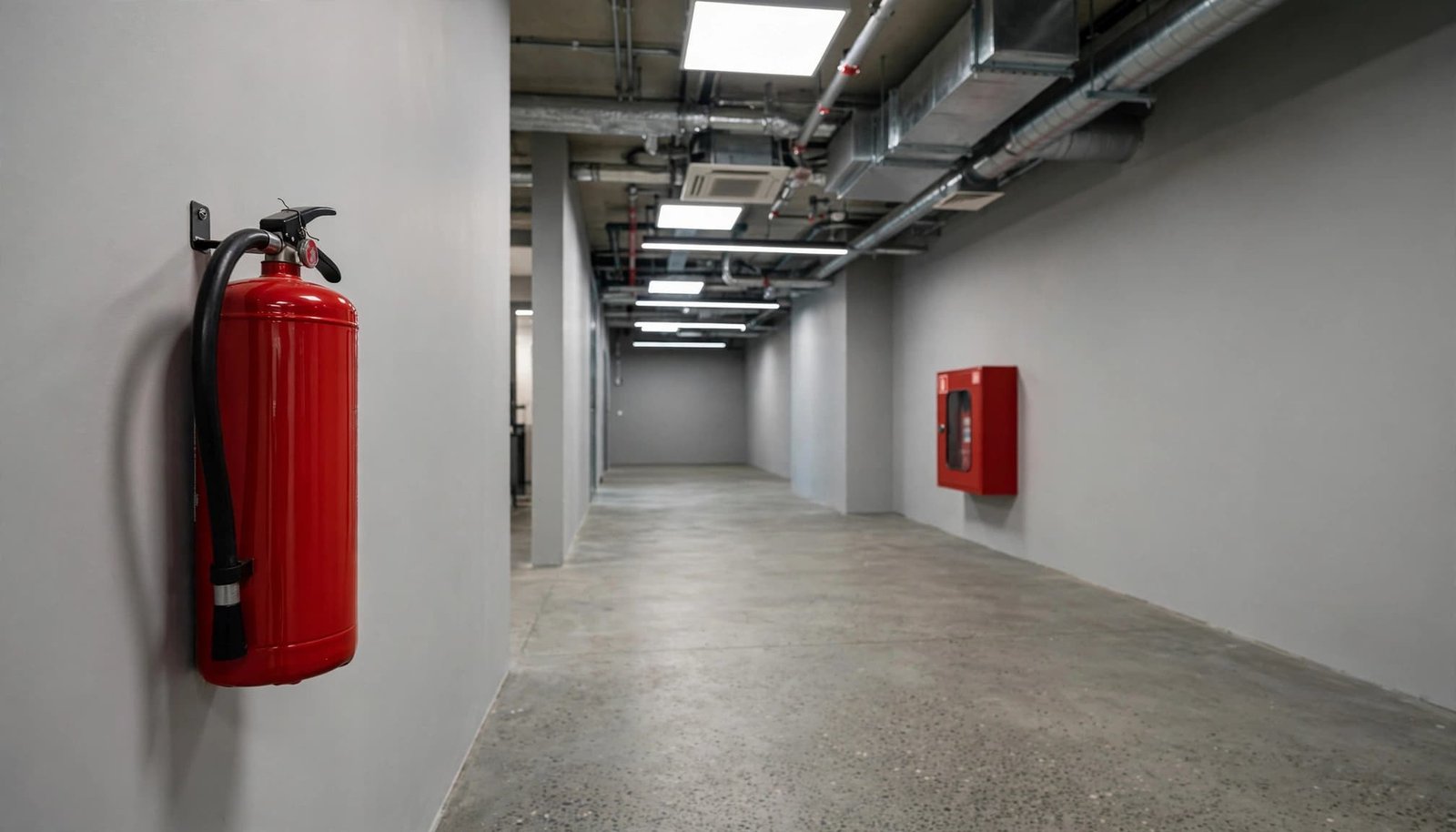
Quantity, rating, travel distance, and location depend on the occupancy hazard, floor layout, extinguisher class, adopted code, and AHJ. Houston materials cite one 2-A, 10-B:C extinguisher per 6,000 square feet for certain business occupancies.
La Porte guidance cites a 2A-20BC minimum, one unit per 1,500 square feet, and travel limits that can extend from 50 to 75 feet in sprinklered buildings. Those are local examples, not statewide fire extinguisher regulations Texas businesses can apply everywhere. Confirm the exact standard with your city or county fire marshal.
Choose the correct extinguisher class
Class A extinguishers handle ordinary combustibles. Class B covers flammable liquids, while Class C addresses energized electrical equipment. Commercial cooking oils and fats require a listed Class K extinguisher near the cooking hazard, as covered in our Class K fire extinguishers guide.
Multifamily facilities may face separate rules. Certain Texas facility standards use a 75-foot corridor travel distance and require a 5-pound ABC or 2.5-gallon water unit in some settings. They also cite mounting limits of 5 feet for units weighing 40 pounds or less, 3.5 feet for heavier units, and at least 4 inches of floor clearance. The adopted code for the facility controls.
Track testing and service records
Testing intervals vary by extinguisher type, manufacturer, and the applicable NFPA 10 schedule. Many stored-pressure dry chemical units use six-year internal examinations and 12-year hydrostatic tests. Water, foam, carbon dioxide, and Class K units often use five-year hydrostatic intervals, which a provider offering fire extinguisher hydrostatic testing can schedule for you.
Review the service tag and unit history rather than relying on a generic date. Keep inspection tags, invoices, test reports, and replacement records available for the AHJ.
How to stay compliant with Texas fire marshal requirements
First, identify your AHJ and confirm the building's occupancy classification and adopted fire code. Then map extinguisher locations, check access routes, and schedule recurring visual checks.
Use a registered Texas provider for annual service, recharging, testing, and replacements. Ask for written records after each visit. The state's fire extinguisher rules document outlines the licensing context for this work.
Service costs vary by local market, extinguisher type, recharge needs, testing, travel, and replacement. Operating an extinguisher service business without required registration or licensing may lead to state action, while local code violations can bring separate enforcement.
Frequently Asked Questions
Do home-based businesses need commercial extinguishers?
It depends on the business activity, building use, and local code. A low-risk home office may face different requirements than a home-based food operation, workshop, or client-facing space.
Does a lease make the landlord responsible?
The lease should assign maintenance duties, but it doesn't remove fire code obligations. Landlords and tenants should confirm who schedules service and who retains compliance records.
Can disposable extinguishers be recharged?
Many disposable extinguishers are not rechargeable and need replacement after discharge or when damaged. Check the manufacturer's instructions and have a licensed provider inspect questionable units.
Should renovations trigger an extinguisher review?
Yes. A new kitchen appliance, storage area, wall, or occupancy change can affect hazard classification, travel distance, and access. Contact the AHJ before finalizing plans.
Final Thoughts
Texas compliance is a shared system. State licensing rules control who may perform extinguisher work, while NFPA 10, OSHA, adopted codes, and the local AHJ shape daily building requirements.
Treat monthly checks, accessible placement, and current service tags as safety work, not paperwork. Confirm local requirements, hire a properly registered provider, and keep records ready for inspection.