PASS Technique: Use an Extinguisher and Know When to Leave
A portable extinguisher can stop a small fire, but only when you can act safely. The PASS technique is a simple memory aid for using one: Pull, Aim, Squeeze, Sweep. It does not mean every fire is safe to fight.
Guidance from the National Fire Protection Association and OSHA stresses the same priority: keep an escape route clear and act only on a small, early-stage fire. Learn the four steps, then learn when evacuation is the safer choice.
Key Takeaways
- PASS means Pull, Aim, Squeeze, and Sweep.
- Aim low at the burning material, not at the tops of the flames.
- Use an extinguisher only on a small, contained fire with a clear exit behind you.
- Sound the alarm, call emergency services, and leave if smoke grows heavy or the fire spreads.
- PASS explains extinguisher operation, not whether it is safe to stay.
What Is the PASS Technique?
The PASS technique is the standard four-step method for operating a portable fire extinguisher. It gives you a quick sequence to remember under pressure: Pull the pin, Aim at the fire's base, Squeeze the handle, and Sweep across the burning material.
Many workplace and home safety programs teach this method because it is short and practical. First Alert's PASS guidance uses the same sequence for household extinguishers.
Still, PASS only explains how to release the extinguishing agent. It does not tell you whether the fire is small enough to handle, whether the air is safe to breathe, or whether you have the correct extinguisher. Those decisions come first.
How to Use a Fire Extinguisher With PASS
Before approaching a fire, alert others and call emergency services. Keep the exit behind you, not beyond the fire. Follow the instructions printed on the extinguisher, since operating details can vary by model.
Pull and Aim at the Fire's Base
First, pull the safety pin to unlock the handle. Some extinguishers also have a tamper seal that must be removed. The pin may feel tight, so pull it firmly without damaging the extinguisher.
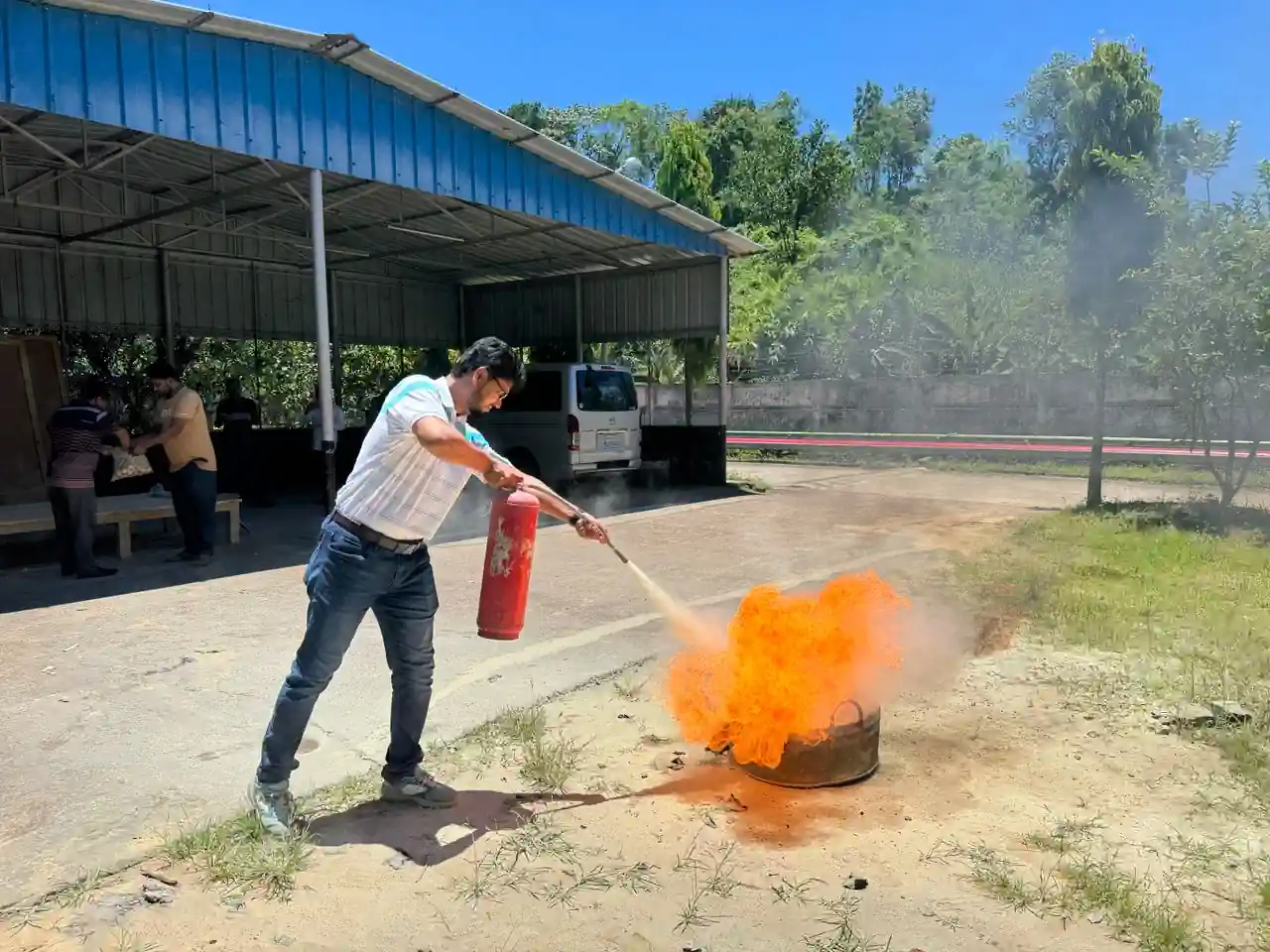
Next, point the nozzle or hose low at the base of the fire. Flames rise above the burning fuel, so spraying only at their tips often fails to stop the source. Stand at a safe distance and move closer only if conditions allow and the extinguisher label directs it.
Keep your body angled toward the exit. If heat, smoke, or fire blocks that route, leave immediately.
Squeeze and Sweep Until the Fire Is Out
Squeeze the handle slowly and evenly to release the agent. A sudden, uncontrolled burst can waste extinguishing material and make it harder to see the fire's base.
While holding the handle, sweep the nozzle from side to side across the burning area. Move steadily rather than chasing the highest flames. Continue until the fire appears out, then watch the area for re-ignition.
If the fire keeps burning, grows, or returns after the extinguisher empties, stop the attempt and evacuate. Close doors behind you if it is safe to do so.
When Should You Use the PASS Method, and When Should You Leave?
The decision comes before PASS. OSHA advises using portable extinguishers only on an incipient-stage fire, meaning a small fire that has just started and is still contained.
Sound the alarm, alert nearby people, and call emergency services before attempting to extinguish a fire. Use PASS only when the air is breathable, smoke is limited, the fire is not growing quickly, and you have a clear route out. The extinguisher must also match the hazard.
Check the Extinguisher and Your Escape Route First
Look for the correct extinguisher type, visible damage, and a pressure or readiness indicator if the model has one. More importantly, confirm that your path outside is open and stays behind you.
The University of Alaska Anchorage's fire-extinguisher guidance lists an unblocked exit and a small beginning-stage fire as conditions for considering extinguisher use. Never stand between the fire and your exit.
Know the Limits of PASS
PASS is a mnemonic, not a guarantee of safety. It applies to portable extinguishers and does not replace evacuation planning, alarm procedures, or hands-on fire safety training.
Leave at once if flames spread, smoke becomes heavy, the exit is threatened, or you feel unsure. If the first attempt does not control the fire quickly, close doors if safe and wait for firefighters outside.
A fire extinguisher is useful only while you can still leave safely.
Frequently Asked Questions
What does PASS stand for?
PASS stands for Pull, Aim, Squeeze, Sweep. It is the standard mnemonic for operating a portable fire extinguisher.
Should I aim a fire extinguisher at the flames?
Aim low at the base of the fire, not at the flame tips. This targets the burning material or fuel that keeps the fire going.
Can I use the PASS technique on any type of fire?
PASS describes the operating steps, but the extinguisher type must match the hazard. Water, foam, dry chemical, and carbon dioxide extinguishers are not interchangeable, so follow the label and local training.
What should I do if the fire comes back after using an extinguisher?
Leave immediately if the fire reignites or is not fully controlled. Ohio State University Extension guidance also advises leaving if the extinguisher does not control the fire, then calling emergency services and staying out.
Is PASS the same as fire extinguisher training?
PASS is only one part of fire extinguisher training. Full training also covers prevention, alarm procedures, extinguisher types, escape planning, and supervised practice.
Conclusion
Pull, Aim, Squeeze, Sweep gives you a clear method for operating a portable extinguisher. Yet people and safe exits matter more than property.
Sound the alarm, call for help, and leave when a fire is spreading or conditions feel unsafe. Learn where extinguishers are located at home or work, then review local fire safety guidance before an emergency happens.