Different Types of Fire Extinguishers: A Practical Guide
Fire extinguishers aren't universal. Using the wrong one can spread flames, create an electrical shock risk, or make a specialized fire harder to control. The right choice depends on what's burning: wood, gasoline, energized equipment, cooking oil, or combustible metal.
Knowing the different types of fire extinguishers starts with the five U.S. fire classes and the agent inside the unit. Check the label, not the extinguisher's color or size.
Key Takeaways
- Match an extinguisher to the fuel involved, not the fire's size.
- ABC dry chemical covers many household and general workplace hazards.
- Water is only for Class A materials, never grease, flammable liquids, or live electrical equipment.
- Commercial fryer fires need wet chemical units, while burning metals require Class D powder.
- Evacuate and call 911 if the fire grows, produces heavy smoke, or blocks your exit.
Different Types of Fire Extinguishers and What They Put Out
Extinguisher labels list lettered fire classes and often a numerical rating. Those markings matter more than appearance. OSHA identifies water units for Class A fires, ABC dry chemical for A, B, and C hazards, and carbon dioxide for B and C hazards under its portable fire extinguisher requirements.
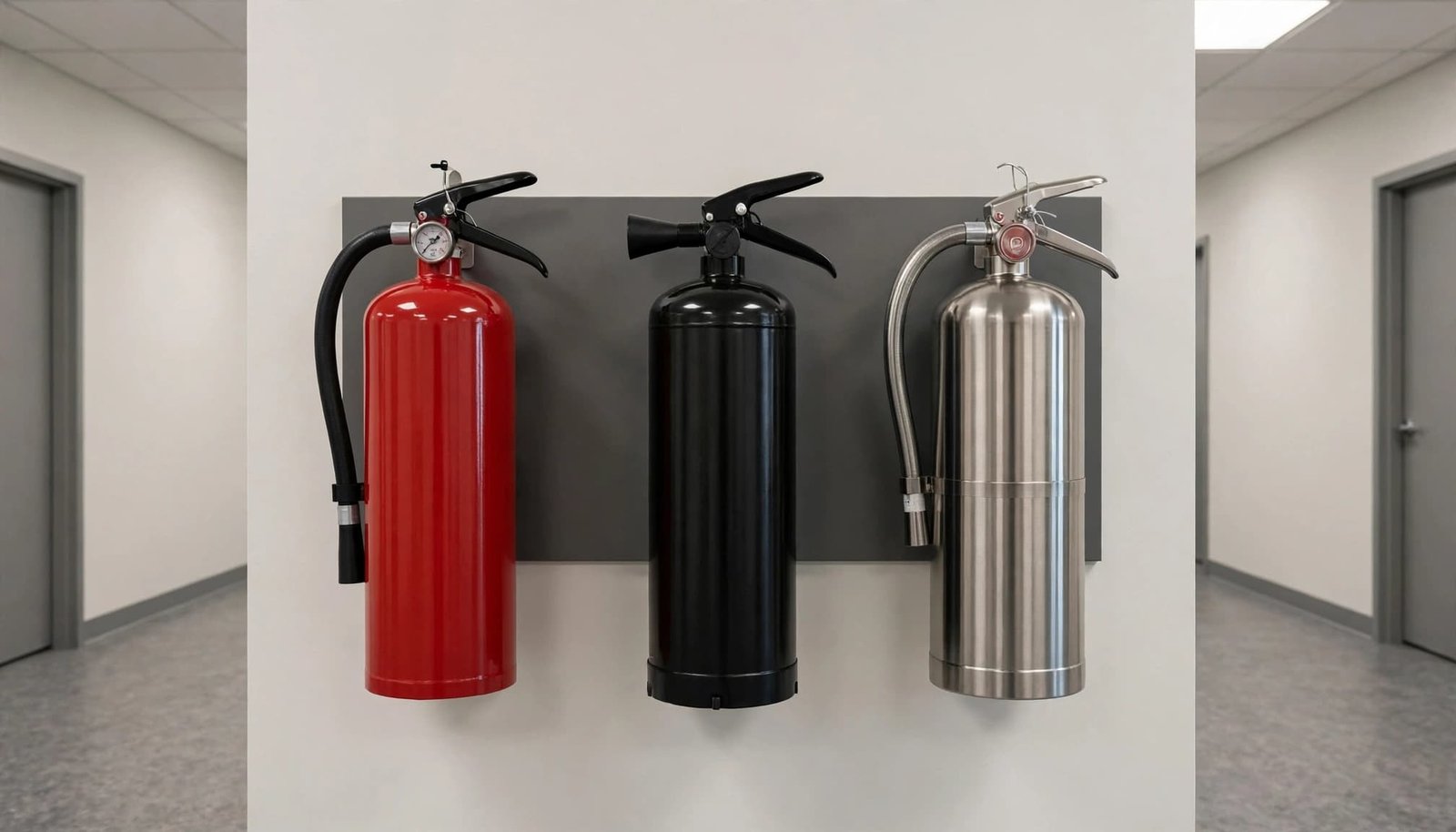
Water and Dry Chemical Extinguishers for Common Fires
Water extinguishers work on Class A materials, including paper, wood, cloth, rubber, and many plastics. Water cools the burning material, but it can spread liquid fuel and conduct electricity.
ABC dry chemical is the common multipurpose choice for homes, offices, and many workplaces. It handles Class A, B, and C hazards. BC dry chemical works on flammable liquids and energized electrical equipment, but it doesn't carry a Class A rating. See our guide to fire extinguisher types for Texas businesses for how these units fit different property types.
Never use water on grease, flammable liquids, or energized electrical equipment.
CO2, Wet Chemical, and Class D Extinguishers for Special Hazards
Carbon dioxide, or CO2, extinguishers work on Class B and C fires and leave little residue. That makes them useful near sensitive equipment. However, CO2 may not stop some Class A materials from re-igniting.
Wet chemical extinguishers are made for Class K fires in commercial kitchens, especially deep fryers and large volumes of vegetable oil or animal fat. Our Class K fire extinguishers guide covers placement rules for restaurant kitchens in more detail. Class D units use specialized dry powder for burning metals such as magnesium, titanium, sodium, potassium, and zirconium. Ordinary ABC powder isn't a substitute for Class D equipment.
Match the Extinguisher to the Fire Class
A fire class identifies the fuel involved. It doesn't measure the fire's size or tell you whether it is safe to fight. The NFPA's fire extinguisher rating guide explains the labels used on U.S. extinguishers.
The Five Fire Classes at a Glance
- Class A involves ordinary combustibles, such as wood, cloth, paper, rubber, and many plastics.
- Class B involves flammable liquids, combustible liquids, and flammable gases.
- Class C involves energized electrical equipment.
- Class D involves combustible metals.
- Class K involves cooking oils and fats in commercial cooking appliances.
Class C describes an electrical hazard, not a separate fuel. After power is disconnected, the remaining fire may be Class A or Class B.
Why Water Is Dangerous on Grease and Electrical Fires
Water can splash and spread burning oil across a stove, counter, or floor. It also creates a shock hazard around energized equipment.
Don't use water, CO2, or standard dry chemical on a metal fire unless the equipment label approves it. Some burning metals react violently with unsuitable agents.
A fire extinguisher is useful only when its agent matches the fuel and you can still leave safely.
How to Choose and Use the Right Fire Extinguisher
Start by identifying likely hazards where you live or work. A kitchen, garage, workshop, office, and commercial fryer area may need different protection. Then check the extinguisher's class letters and rating before mounting it where people can reach it quickly. Our fire extinguisher sales page can help you find a supplier that carries the right unit for each space.
For workplaces, NFPA 10 and OSHA 29 CFR 1910.157 cover selection, inspection, maintenance, and employee use, as outlined in our commercial fire extinguisher requirements guide. OSHA requires monthly visual inspections and annual maintenance for applicable workplace extinguishers.
A Simple Extinguisher Checklist for Homes and Workplaces
Check each unit for the correct ABC, BC, CO2, wet chemical, or Class D rating. Keep it visible, accessible, properly mounted, and free from damage.
Also inspect the pressure indicator, tamper seal, hose, and service date, or schedule a professional fire extinguisher inspection. Follow the manufacturer's instructions and local requirements rather than relying on a universal replacement schedule, and see our fire extinguisher maintenance guide for a full walkthrough.
Use PASS Only on a Small, Contained Fire
Use an extinguisher only on an early-stage fire with a clear exit behind you. Follow PASS: pull the pin, aim at the base of the flames, squeeze the handle, and sweep side to side.
Evacuate and call 911 if flames spread, smoke becomes heavy, an exit is blocked, or the extinguisher doesn't control the fire immediately.
Frequently Asked Questions
Is an ABC extinguisher enough for most homes?
An ABC extinguisher covers common household risks involving ordinary combustibles, flammable liquids, and energized electrical equipment. It isn't the right choice for commercial fryer fires or combustible metal fires.
Can I use a Class K extinguisher in my home kitchen?
Class K extinguishers are designed mainly for commercial kitchens with deep fryers and substantial cooking-oil hazards. For a small pan fire, turn off the heat if safe, cover the pan with a lid, leave the area, and call 911 if flames don't stop immediately. Never carry a burning pan.
What does the number on an extinguisher label mean?
Rating numbers show tested firefighting capacity for the applicable class. For example, a Class A number relates to water-equivalent performance, while Class B ratings reflect liquid-fuel fire performance. Compare the full label, not the extinguisher's physical size.
Should I fight a fire or evacuate?
Evacuation comes first. Use an extinguisher only if you are trained, the fire is small and contained, smoke isn't dangerous, and you have a clear escape route. Call 911 even if the flames appear to be out.
Final Safety Reminder
The safest choice among the different types of fire extinguishers depends on the fire class and fuel, not convenience. ABC units fit many everyday hazards, while CO2, wet chemical, and Class D extinguishers address more specific risks.
Keep water away from grease and energized electrical fires. Check labels, keep units accessible, and protect people before property by leaving early and calling for emergency help.